

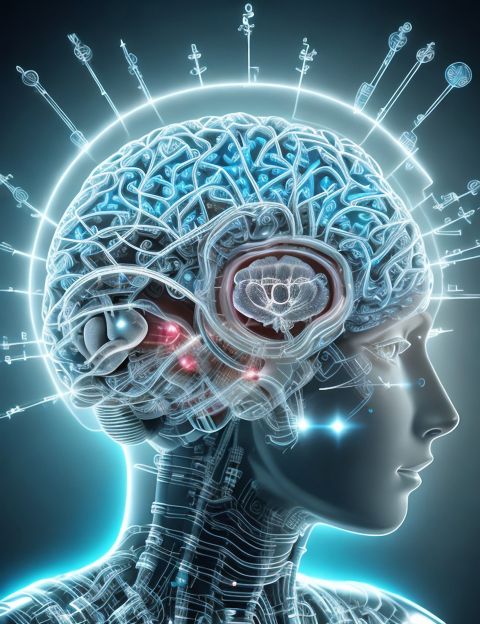
We continue the Talks in the Cube with another expert discussion on 17 September 2026.
Artificial intelligence is no longer a promise for the future in the life sciences - it is already a working tool reshaping day-to-day research.
In genomics, machine learning helps uncover disease signatures buried in vast, complex datasets that would be invisible to the human eye.
In medical imaging, AI accelerates the analysis of millions of data points, making diagnoses faster and more precise, with direct relevance for public health.
And in protein science, AI-driven design algorithms are making possible what was unthinkable just a few years ago: Developing thousands of new antibodies and proteins per month, at a speed and scale that classical lab work alone could never reach.
At the same time, this shift raises real questions:
How reliable are AI models in a field where mistakes affect patients?
Who regulates, who is liable, who decides?
And what does it take to turn a promising academic tool into something researchers - including those without a computational background - actually trust and use?
With this edition of Talk in the Cube, we want to capture exactly that range - from biomarker discovery and a new AI research assistant, to public health imaging, to industrial-scale protein design. Three experts, three perspectives, one shared question: What can AI in the life sciences really deliver today - and what can't it do yet?
A Panel Discussion with
Alexander Blume, Max Delbrück Center, Akalin Lab;
Joana Grah, Centre for Artificial Intelligence in Public Health Research, Robert Koch Institute;
Philip Lössl, Absea Biotechnology;
Stefanie Reichelt (Moderation).
Join us for this edition of Talk in the Cube to explore
- how machine learning is being used to extract clinically relevant signals from complex biological data, and how a new generation of AI research assistants is bringing generative AI to biomedical scientists without a computational background,
- how AI is accelerating protein and antibody design at industrial scale, and what a proteome-scale data layer for AI-for-Science looks like in practice,
- and what it takes to translate these tools from academic pipelines into real products people trust.
Alexander Blume
works in the Akalin Lab at the Max Delbrück Center for Molecular Medicine, where his research focuses on applying computational and machine learning methods to identify disease biomarkers from cell-free DNA methylation patterns - work with direct relevance to non-invasive diagnostics for cardiovascular and other diseases. His most recent work includes the development of Rolv.io, an AI-powered research assistant for the life sciences that accelerates data analysis, literature review, and hypothesis generation using generative AI.
Joana Grah
is an applied mathematician and Research Associate at the Centre for Artificial Intelligence in Public Health Research (Robert Koch Institute), where she works on machine learning and imaging tools for real-world applications in public health. She holds a PhD in Applied Mathematics from the University of Cambridge and previously worked at the Alan Turing Institute. Alongside her research, she is an active science communicator, regularly speaking on AI ethics and regulation in the life sciences.
Philip Lössl
is Senior VP at Absea Biotechnology, working on the AI-driven scaling of antigen and antibody development and large-scale data generation to enable next-generation protein AI. Absea combines a machine-learning-based construct design algorithm with high-throughput production to build one of the world's largest libraries of recombinant human proteins - now used to develop monoclonal antibodies across the human proteome. Complementing this, Absea's innovation center in Berlin develops mass spectrometry technologies for mapping biomolecular interactions at proteome scale, providing a data layer for novel AI-for-Science approaches. Philip's work sits at the interface of protein science and business development, translating academic-grade proteomics into scalable biotech products.
Stefanie Reichelt (Moderation)
is a scientist turned innovation and community leader. She spent 16 years heading the light microscopy laboratory at the Cancer Research UK Cambridge Institute, developing imaging techniques for cancer diagnostics, before moving into the entrepreneurial world. As Community Director at Carbon13, Cambridge's venture builder for the climate emergency, and later as Head of Campus Development at Teufelsberg Berlin, building an interdisciplinary campus at the intersection of science, education and entrepreneurship. She brings this cross-disciplinary lens - science, community, and Standort development - to moderating Talk in the Cube series.
Target audience
Founders & scientists from start-ups, small and medium-sized life science companies and scientific institutions.
Costs
Participation is free of charge. Registration is requested.
When
Thursday, 17 September 2026
5:00 p.m. – 7:00 p.m.
Where
BerlinBioCube (Building D95), Campus Berlin-Buch, Robert-Rössle-Straße 10, 13125 Berlin
Further information
Uwe Lohmeier per E-Mail: u.lohmeier@campusberlinbuch.de
About "Talk in the Cube"
With the event series "Talk in the Cube", we bring business and science together on the Berlin-Buch campus and connect founders of start-ups or life science companies with scientists, e.g. from the Max Delbrück Center, FMP, Charité and BIH. We invite experts on business topics or trends in the life sciences and highlight aspects such as
What innovations are there in the start-ups and who is driving them forward?
How does the life science business world work and where can synergies with science be created?
How does the "networked laboratory" and AI can work together in life science?
About the Berlin BioScience Academy "BBA"
The Berlin BioScience Academy (BBA), formerly known as "Gläsernes Labor Akademie (GLA)", supports young scientists throughout Germany in their professional orientation and entry into the pharmaceutical and biotechnology industry. It offers technical assistants and laboratory technicians in-service training on current topics in the life sciences.
Our focus is on a close connection between science and business. It enables the conception, certification and implementation of a practice-oriented continuing training program with a top-class team of experts from research institutions and industry.
The life science program includes summer schools, laboratory courses, seminars, webinars and congresses. In addition, the BBA invites to the "Talks in the Cube" at the BerlinBioCube. The talks regularly inform about "hot topics" in Biotech & Biomedicine and provide the campus network forum for biotech companies, research institutions, investors and associations.
About Campus Berlin-Buch GmbH
Campus Berlin-Buch GmbH (CBB) is developing the international campus together with the research institutions Max Delbrück Center for Molecular Medicine in the Helmholtz Association (Max Delbrück Center) and the Leibniz-Forschungsinstitut für Molekulare Pharmakologie (FMP) as an innovative and sustainable science and technology location.
As an economically independent, non-profit company with a public mandate, Campus Berlin-Buch GmbH is a neutral and intermediary partner. It serves as the interface to basic research, clinical research, companies, administration, policymakers in government and the general public and is engaged in competence networks as well as support and service networks on a regional and international level.
Picture credits: W. Eckert on Pixabay
Version: 21 July 2026
Subject to modifications